Climbing shoes vs bouldering shoes
The terms are often used interchangeably, but they point to different priorities. Bouldering shoes typically favour aggressive downturns and sticky rubber for powerful, short problems on overhangs. Rock climbing shoes is the broader term, covering everything from comfortable all-day shoes for long routes to precision edging shoes for vertical faces.
If you boulder exclusively, look for models with pronounced asymmetry and a strong downturn. If you're climbing varied terrain or multi-pitch routes, a more neutral profile with good edging support will serve you better. Many climbers own more than one pair to match the style of climbing they're doing that day.
What to look for when buying climbing shoes online
Fit is everything, and it's the hardest thing to judge remotely. Climbing shoes should be snug without being painful, with no dead space at the toe. Your toes should be flat or slightly curled, depending on the shoe's downturn, but never crunched or overlapping unless you're choosing a very aggressive shoe for hard bouldering.
Check the return policy before you order. Sizes vary significantly between brands—La Sportiva and Scarpa, for instance, have different lasts and sizing philosophies. If you've worn a brand before, that's a useful starting point, but even within a brand, different models fit differently.
- Measure both feet in the afternoon when they're slightly swollen
- Read the specific product's sizing notes, not just the brand's general guidance
- Leather stretches up to half a size; synthetic materials stretch less
- Try shoes on with the socks (or lack of them) you'll climb in
Choosing between brands: La Sportiva, Scarpa and others
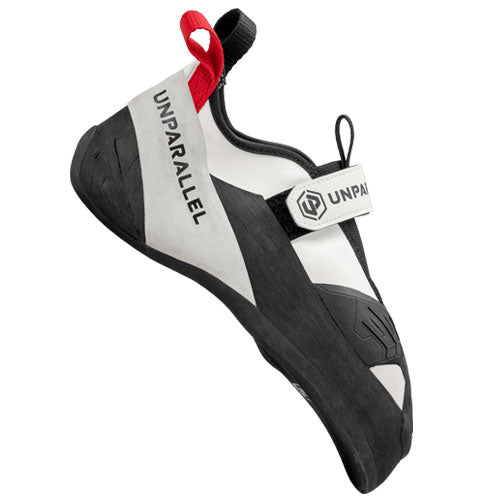
Each brand builds shoes on a different last, which is the foot-shaped mould that determines volume, width and heel shape. La Sportiva shoes tend to suit narrower feet with lower volume, while Scarpa often fits medium to wider feet with higher insteps. Beyond the major names, brands like Evolv, Tenaya and Unparallel each bring their own fit characteristics and rubber compounds.
Don't assume brand loyalty will serve you. A climber who loves one model from a brand may find another from the same company completely wrong for their foot. Focus on the fit and the intended use rather than the logo.
Comparing climbing shoe prices and deals
Climbing shoes span a wide price range, generally reflecting the materials, construction methods and specialisation of the design. Entry-level shoes are typically less aggressive, more comfortable and built for learning, while higher-priced models often feature softer, more sensitive midsoles, refined rubber compounds and shapes designed for specific styles of climbing.
Sales and previous-season models can offer excellent value, but only if the fit is right. A discounted shoe that doesn't fit your foot or your climbing style is no bargain. Price should come after you've narrowed down the shoes that actually work for your needs.
Neutral, moderate or aggressive
Neutral shoes have a flat profile and a relaxed fit, making them ideal for beginners, all-day comfort and vertical or slab climbing where edging matters more than toe hooking. Moderate shoes introduce some asymmetry and a gentle downturn, balancing comfort with performance on steeper terrain. Aggressive shoes are sharply downturned and asymmetric, built for overhangs, pockets and powerful moves on hard boulder problems or sport routes.
If you're new to climbing or spending long days on rock, start with a neutral or moderate shoe. Aggressive shoes demand more from your feet and are uncomfortable to wear for extended periods, but they reward you on steep, technical terrain once your technique and foot strength have developed.
Questions we get asked
Should climbing shoes hurt?
They should be snug and feel slightly uncomfortable when you first put them on, but not painful. You should be able to stand and climb without your toes going numb or cramping. Pain means the shoe is too small or the wrong shape for your foot.
How much do climbing shoes stretch?
Leather uppers can stretch up to half a size with use, while synthetic materials stretch much less, usually only in width. Rubber soles and rands don't stretch at all. Factor this in when deciding between half sizes, but never buy shoes that are painful from the start.
Can I use the same shoes for indoor and outdoor climbing?
Yes, most climbers do. Indoor walls are typically more polished, so softer rubber can help with grip, while outdoor rock rewards stiffer edging. A good all-round shoe handles both, though specialists might prefer different shoes for different settings.
Do I need different shoes for lead climbing and bouldering?
Not necessarily. Many climbers use the same shoes for both, especially when starting out. As you progress, you might prefer a more comfortable, less aggressive shoe for long routes and a downturned, sensitive shoe for powerful boulder problems.
How do I know when to replace my climbing shoes?
When the rubber on the sole wears through to the midsole, or when the rand (the rubber around the edge) is damaged. Many shoes can be resoled before they reach that point, which is far cheaper than buying new and preserves a shoe that's already moulded to your foot.